Is It Illegal to Drive With a Dog in the Car? UK Law Explained
Thinking about driving with your dog? Here is the simple version, with no jargon. Driving with a loose dog is not a crime on its own — but it can still land you a fine and points on your licence. Here is why, and the easy way to stay on the right side of it.
What the law actually says
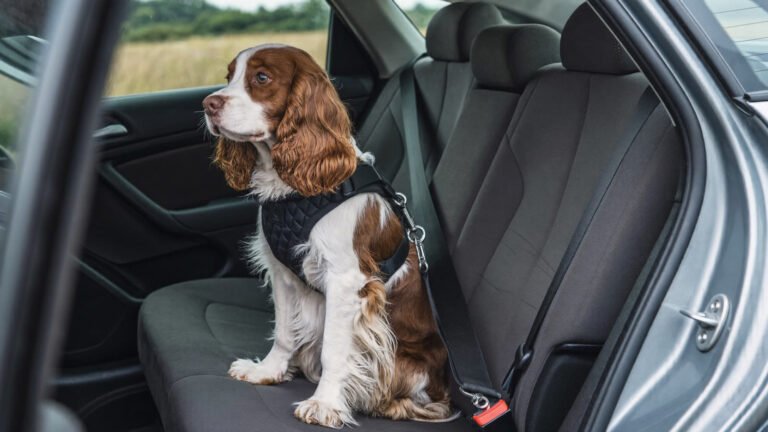
There is one rule that matters here. It is called Rule 57 of the Highway Code. It says that when a dog is in a car, it should be held safely so it cannot climb around, bother the driver, or get thrown about if the car stops fast.
Rule 57 says “should”, not “must”. In the Highway Code that is important. A “must” rule is a law on its own. A “should” rule is strong advice. So breaking Rule 57 is not a crime by itself.
What it could cost you
If the police decide your dog made you a careless driver, this is what you are looking at:
There is one more cost people forget. Many car insurers can say no to a claim if your dog was loose in a crash. So a loose dog could turn a small bump into a very expensive day.
The real reason to bother
Forget the fine for a second. The bigger reason is what happens in a crash.
In a 30 mph stop, a 20 kg dog is thrown forward as hard as a small motorbike.
That is dangerous for your dog and for everyone in the front seats. A dog seat belt costs less than a tank of fuel and stops that from happening. That is the whole point.
The safe ways to travel
The Highway Code names four things that count as holding your dog safely. Pick whichever suits your car and your dog.
Seat belt & harness
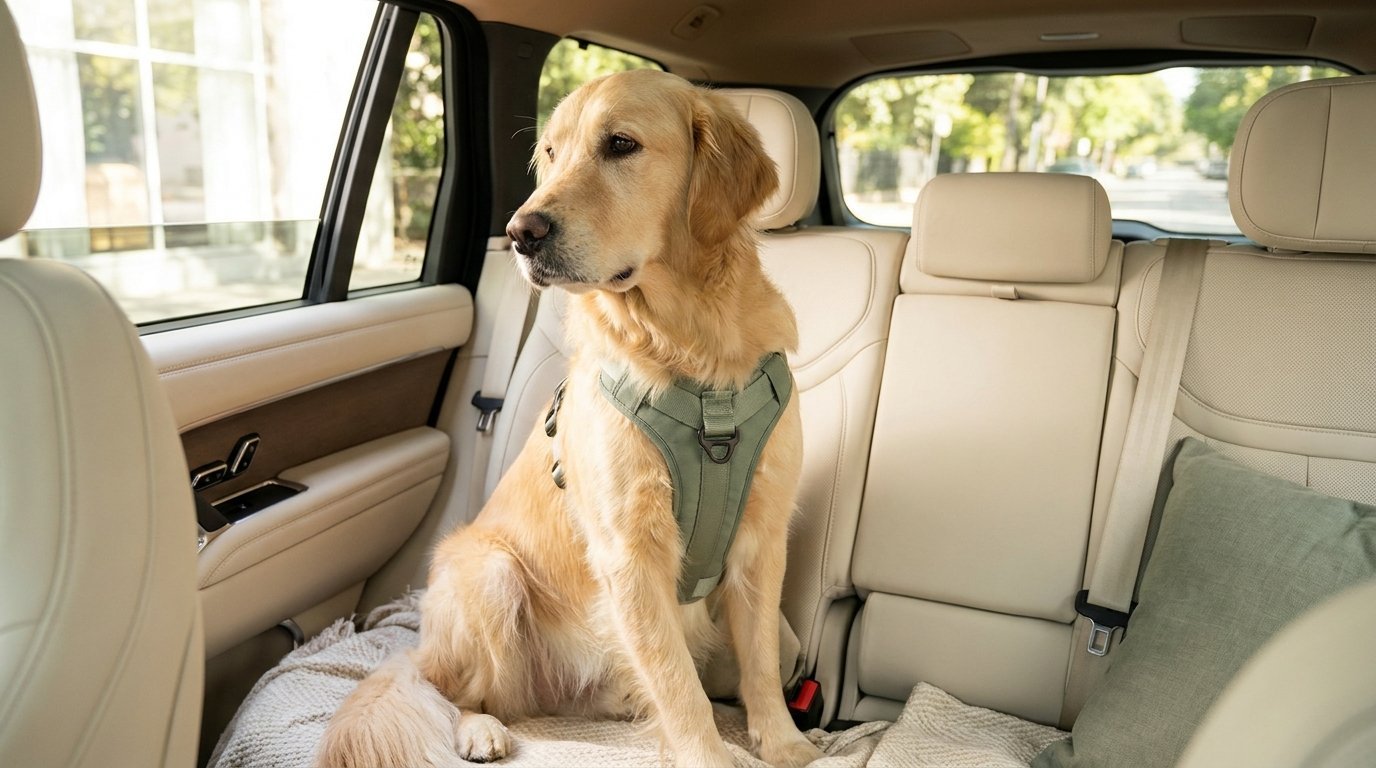
The cheapest and quickest. A strap clips into your seat belt buckle and onto a harness. Takes ten seconds.
Crate or carrier
Best for small dogs, and for dogs who feel nervous in the car. Snug and safe.
Dog guard
A barrier behind the back seats. Good for a big dog who rides in the boot of an estate.
Boot liner
Keeps the boot clean and comfy. Use it with a guard, not instead of one.
We stock two of those four. Our standard strap suits most dogs and most cars. There is a reflective version for dark mornings, a heavy-duty one with steel hardware for big or strong dogs, and a 2-in-1 strap that becomes a lead when you arrive. If your dog travels in the boot, a waterproof boot liner keeps the car clean — use it alongside a guard, not instead of one.
The one mistake to avoid
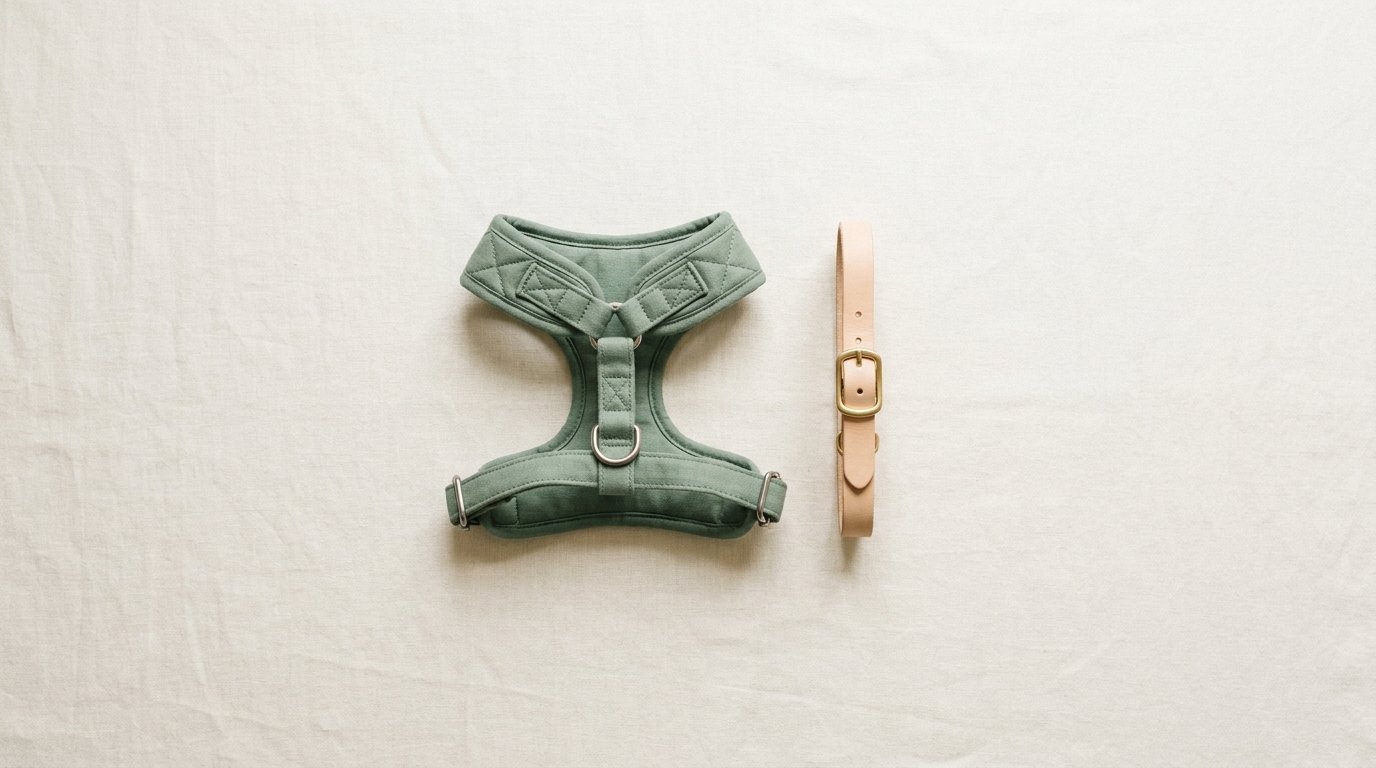
This is the big one. Never clip a car strap to your dog’s collar. Always use a harness.
Think about it. If the car stops hard and the strap is on a collar, all that force lands on your dog’s neck. A harness spreads the force across the chest instead. If your dog only has a collar, buy a car harness at the same time as the strap.
Quick answers
Can my dog sit in the front? It is not banned, but it is a bad idea. If the airbag goes off it will hit your dog hard. If your dog must go in front, push the seat all the way back.
Can my dog put its head out the window? Better not. Wind can throw grit into a dog’s eyes, and a dog leaning out is a distraction. Use the window lock.
Does this count for short trips too? Yes. Most crashes happen close to home and at low speed — exactly when people skip the strap.
Sort the car in ten seconds
A seat belt strap is the cheapest way to follow Rule 57, and the fastest to fit. Ours clip into the buckle you already have, fit every UK car, and start at £12.99.
Shop dog car safety →This guide explains the Highway Code in plain terms. It is not legal advice. If you are facing a prosecution, speak to a solicitor.