How Cold Is Too Cold for Dogs? A UK Temperature Guide
A British winter rarely gets truly brutal, so most of us never stop to think about it. Then a frosty January morning comes along, your dog is shivering by the lamppost, and you wonder whether you should even be out. Here is a straight answer, by temperature and by type of dog.
Is your dog feeling the cold?
A padded, waterproof puffer coat with reflective trim, sized for medium and large dogs. Free UK delivery.
See the winter dog coat →How cold is too cold? The temperature guide
There is no single number that suits every dog. A husky and a chihuahua live in different worlds. The chart below splits dogs into two rough groups and is based on the Tufts Animal Care and Condition scale, which UK pet-care sources widely use.
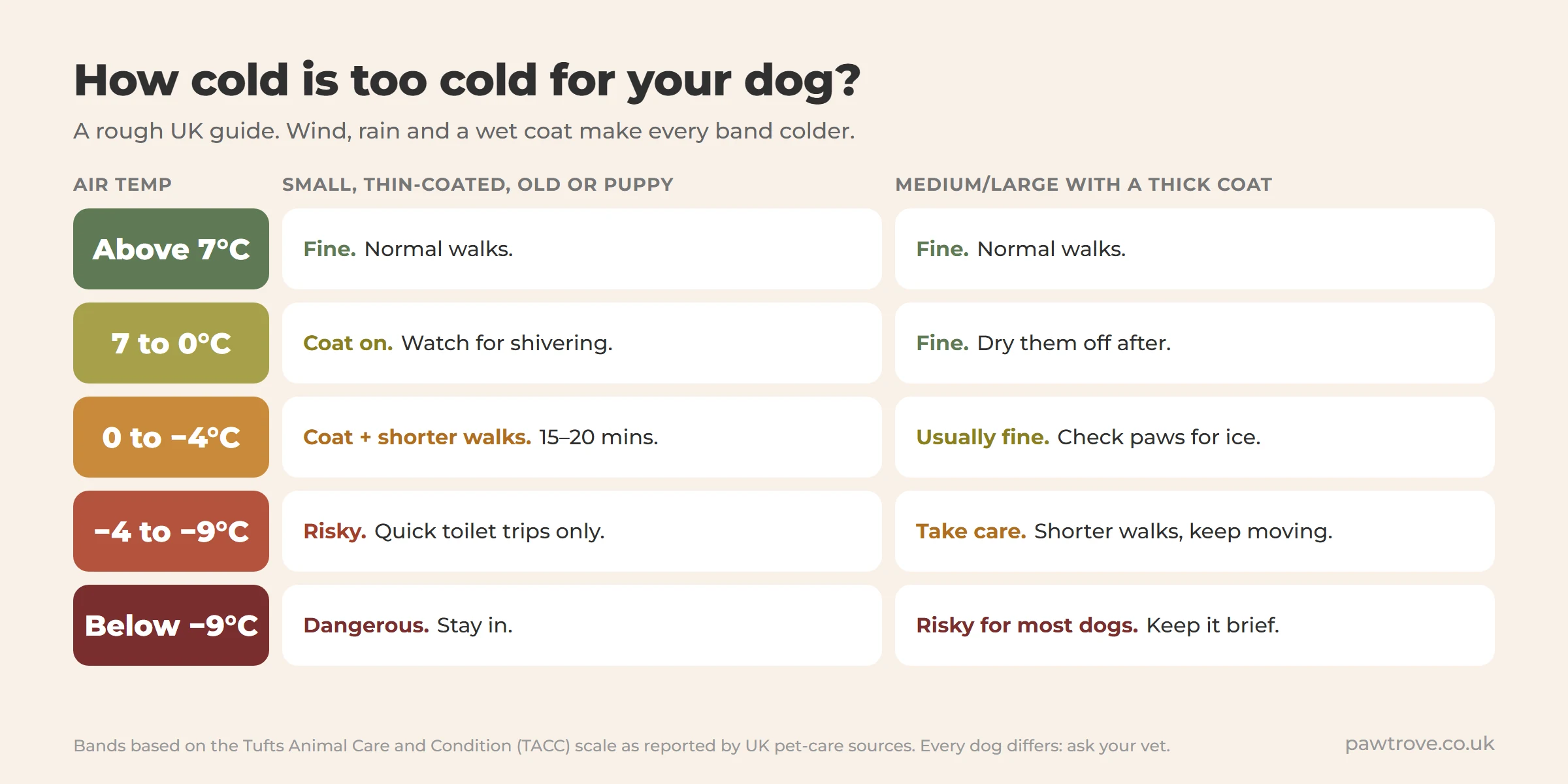
| Temperature | Small, thin-coated, old or puppy | Medium or large with a thick coat |
|---|---|---|
| Above 7°C | Fine for normal walks | Fine for normal walks |
| 7°C to 0°C | Coat on, watch for shivering | Fine, dry them off after |
| 0°C to −4°C | Coat and shorter walks (15–20 minutes) | Usually fine, check paws for ice |
| −4°C to −9°C | Quick toilet trips only | Shorter walks, keep moving |
| Below −9°C | Stay in | Keep it brief |
Look at the dog, not just the thermometer. A wet dog in a 4°C wind can be colder than a dry one at freezing.
Why some dogs feel the cold more
Three things decide how well a dog copes: size, coat and condition.
- Size. Small dogs have more skin for their body weight, so they lose heat faster. They are also closer to cold, wet ground.
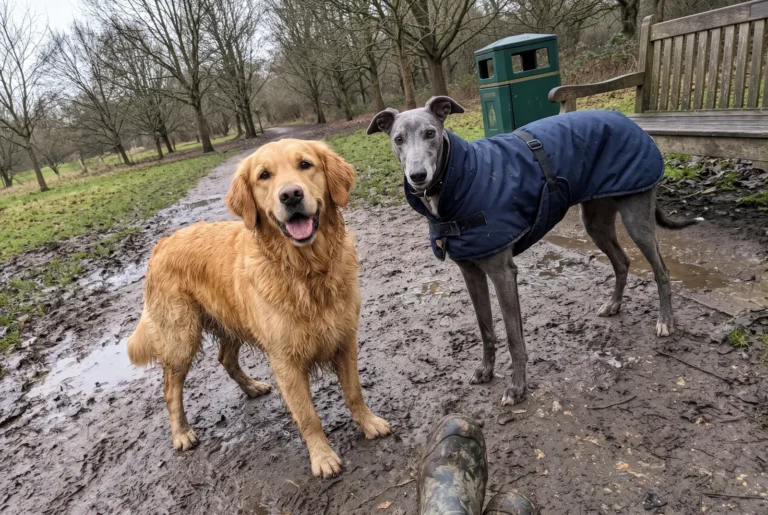
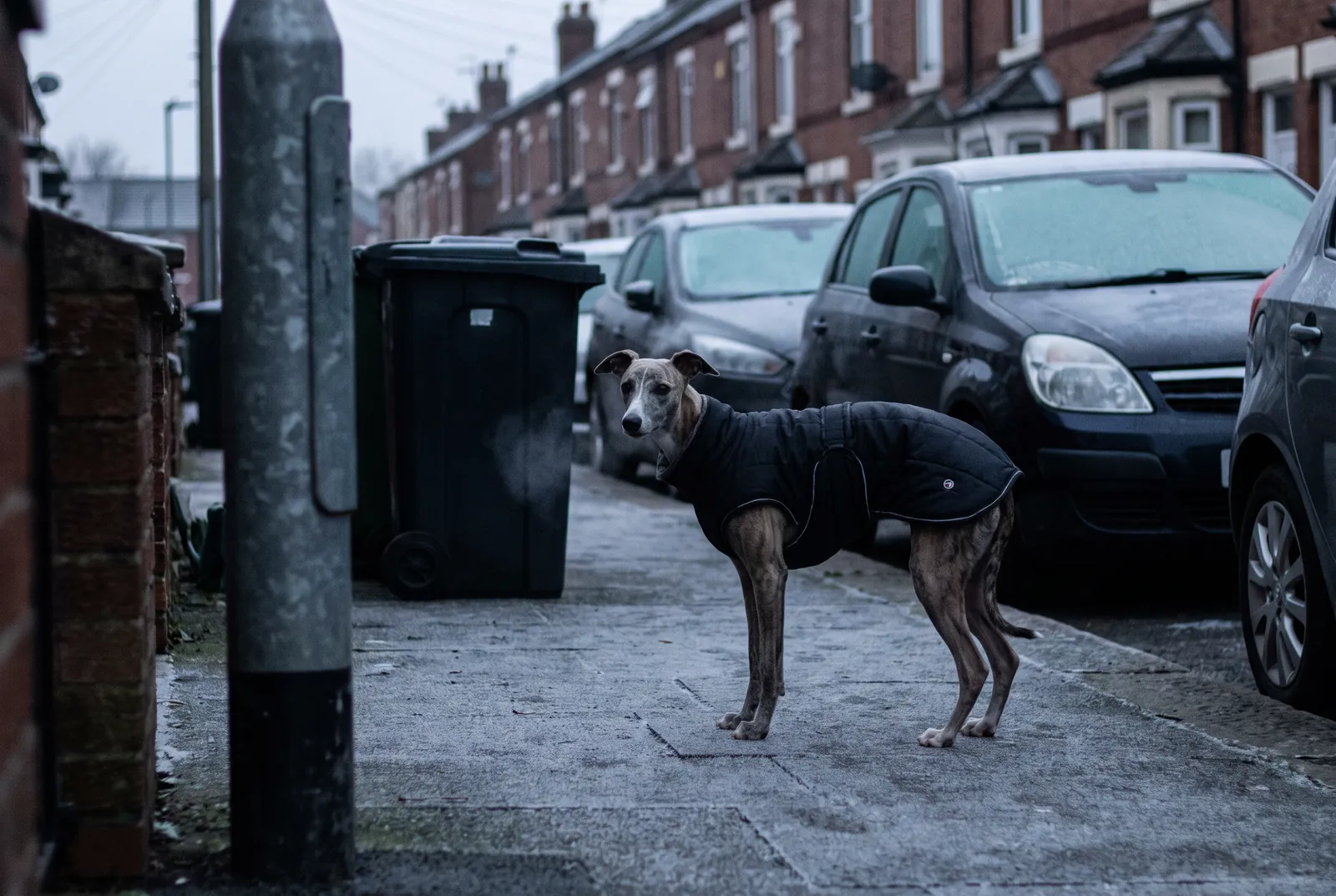
- Coat. Double-coated breeds (huskies, German Shepherds, Golden Retrievers, Labradors) have a woolly undercoat that traps warm air. Single, short coats (greyhounds, whippets, Staffies, Boxers, French Bulldogs) do not.
- Body fat. Lean, athletic dogs have little insulation. Sighthounds are the classic example.
- Age and health. Puppies cannot control their temperature well yet. Older dogs, and dogs with arthritis, heart problems or thyroid problems, struggle more too.
- Grooming. A Cockapoo fresh from a short clip has lost its insulation overnight.
Not sure which group your dog is in? Our breed-by-breed guide, Does my dog need a coat?, goes through it.
6 signs your dog is too cold
Your dog cannot tell you they are cold, but they will show you. If you spot any of these on a walk, head for home.
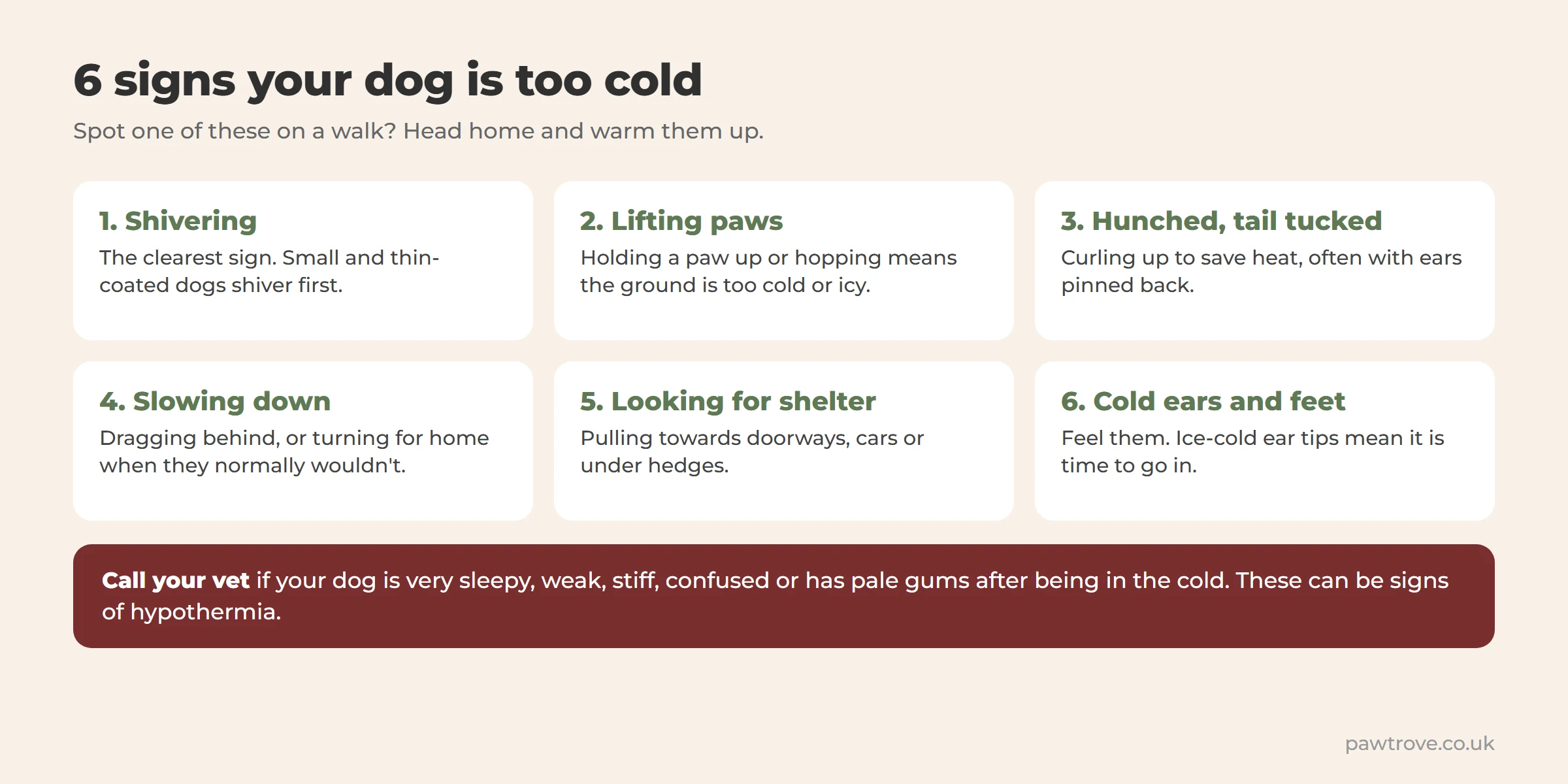
Shivering
The clearest sign. Small and thin-coated dogs shiver first.
Lifting paws
Holding a paw up or hopping means the ground is too cold or icy.
Hunched, tail tucked
Curling up to save heat, often with ears pinned back.
Slowing down
Dragging behind, or turning for home when they normally would not.
Looking for shelter
Pulling towards doorways, cars or under hedges.
Cold ears and feet
Feel the ear tips. Icy ears mean it is time to go in.
How to keep your dog warm on winter walks
- Walk at the warmest time of day. Late morning or early afternoon is often several degrees warmer than first thing.
- Go shorter but more often. Two 20-minute walks beat one long, cold slog for small dogs.
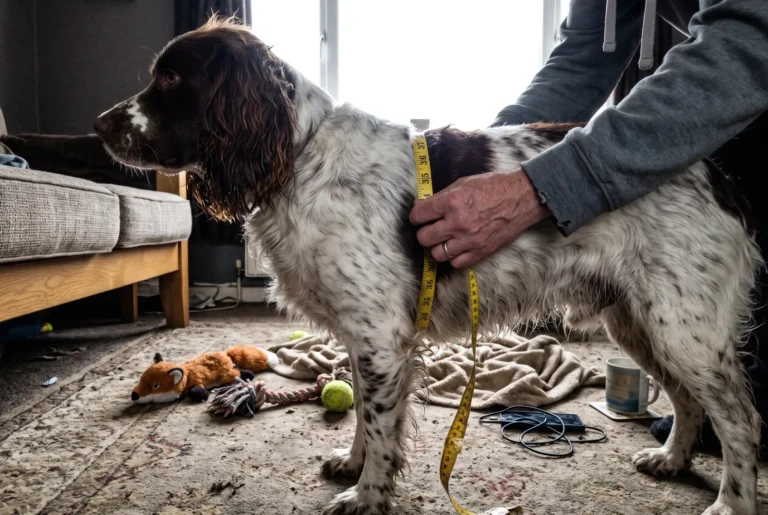
- Use a coat if your dog needs one. A padded, waterproof winter coat keeps the back and chest dry, which is where most heat is lost. Measure first, using our coat measuring guide.
- Keep moving. Standing around chatting at the park is when dogs get cold. Keep a steady pace.
- Check paws. Snow balls up between toes, and grit and salt on pavements can sting. Rinse paws with lukewarm water when you get home.
- Dry them properly. A wet coat loses heat fast. A towel, or a microfibre drying robe, gets them dry while you put the kettle on.
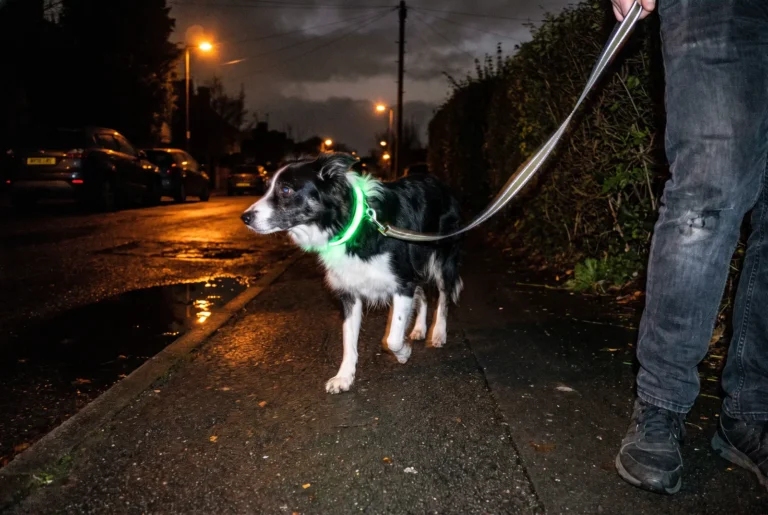
- Be seen. Winter walks often happen in the dark. See our guide to walking your dog in the dark.
Is it ever too cold to walk a dog at all?
For most UK winters, no. Dogs still need to go out to the toilet and to stretch their legs. On the very coldest days, swap the long walk for two or three short ones and make up the difference indoors with brain games and enrichment. Ten minutes of sniffing and problem solving tires a dog out more than you would expect.
Quick answers
Do dogs get cold at night?
Yes, especially small, old and thin-coated dogs. Keep their bed off cold floors and out of draughts, and add a blanket they can burrow into.
What temperature is too cold to walk a dog?
For small or thin-coated dogs, keep walks short below 0°C and very brief below −4°C. Large, thick-coated dogs usually cope with normal walks down to about −4°C, but keep an eye on them below that.
Do dogs get cold like humans?
In a similar way, yes. They lose heat through thin areas such as ears, paws and tummy, and they shiver to warm up.
Is snow too cold for dogs?
Most dogs love a short play in snow. Keep it short for small dogs, and dry them off afterwards.
- PetsRadar: What temperature is too cold to walk a dog? (a vet answers)
- Animal Friends: How cold is too cold for dog walks?
Temperature bands follow the Tufts Animal Care and Condition scale as reported by these sources. Last checked: 17 November 2026.
Keep them warm and dry this winter
Padded, waterproof dog coats with reflective trim, sizes XL to 6XL, with free UK delivery.
See the winter dog coat →General advice, not veterinary advice. Every dog is different. If you are worried about your dog in the cold, speak to your vet.