Dog Dew Claws: What They Are and How to Trim Them
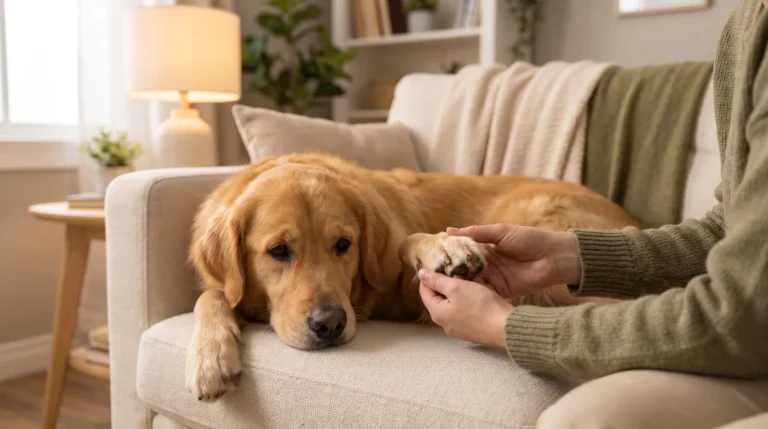
A dew claw is the extra nail on the inside of your dog’s leg, a little way up from the paw. Almost every dog has dew claws on the front legs, and some breeds have them on the back legs too. Because they never touch the ground, dew claws on dogs never wear down, which makes them the nails most likely to overgrow, snag or curl into the skin. Here is what they are, how to trim them, and what to do about a dew claw injury.
Trimming dew claws at home?
LED dog nail clippers light up the nail so you can see the quick and stop in time. Made for small dogs and puppies. Free UK delivery.
See the clippers with light →What is a dew claw on a dog?
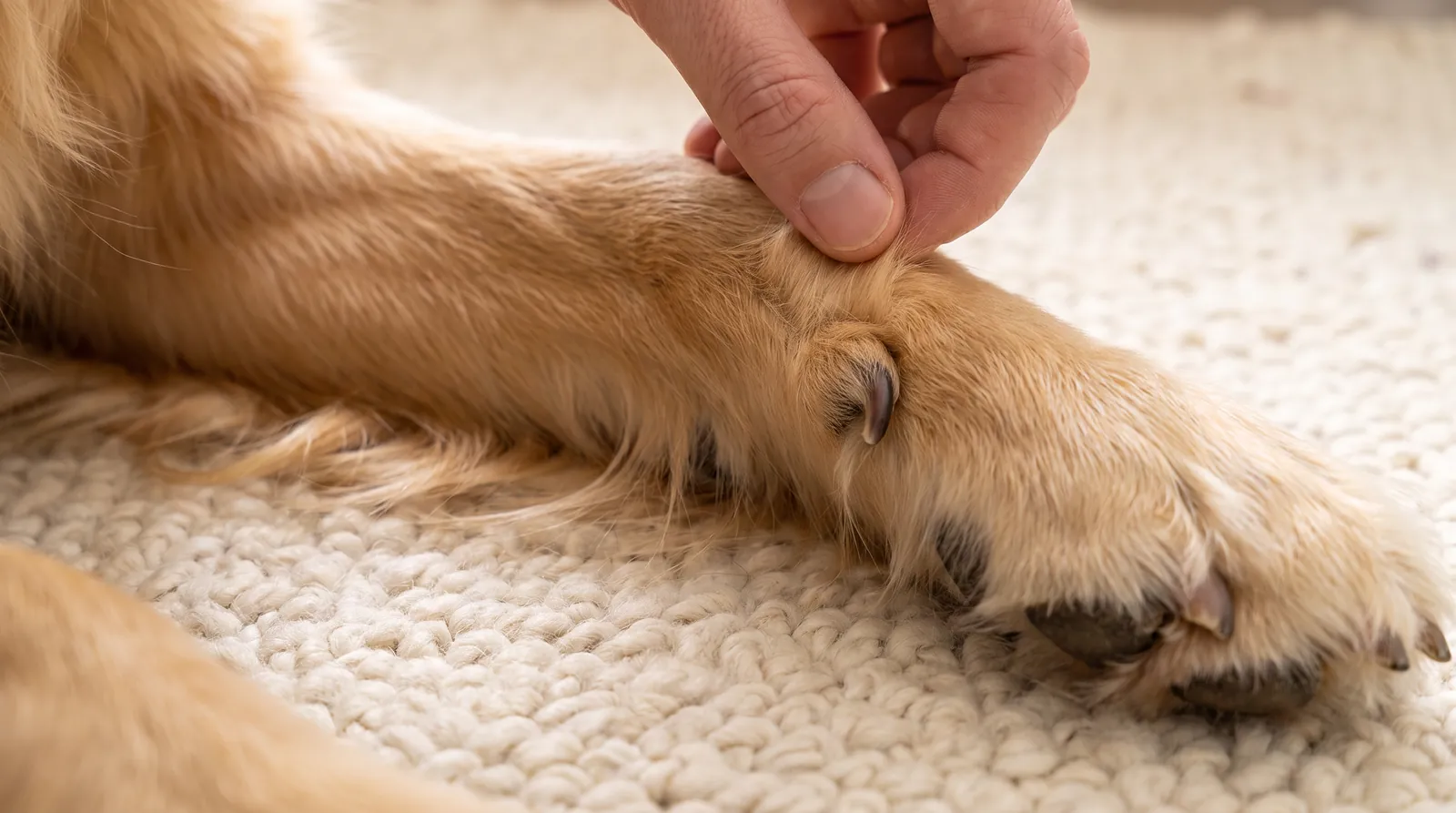
A dew claw is a small extra toe with its own nail, sitting higher up on the inside of the leg. You may also hear it called a “duke claw”, which is a mishearing of the same thing.
- Front dew claws: nearly all dogs are born with one on each front leg. They are attached by bone and ligament, a bit like a thumb.
- Back (rear) dew claws: some dogs have them on the back legs as well. These are usually attached only by skin, so they are looser and more likely to snag.
- Double dew claws: some breeds have two on each back leg. Breeds known for rear or double dew claws include the Pyrenean Mountain Dog (Great Pyrenees), Briard, Beauceron and Icelandic Sheepdog.
What are dew claws for?
They are not useless. Front dew claws help dogs grip toys and bones, steady the wrist when they turn sharply at speed, and get extra grip when climbing or scrambling out of water. Watch a dog hold a chew between its front paws and you will see them at work.
Why dew claws on dogs need extra attention
Ordinary nails get some wear from walking. Dew claws get none. Left alone, a dew claw keeps growing in a curve until it can catch on carpet, bedding or undergrowth, tear, or grow round into the pad, which is painful and can become infected. They are also easy to miss under longer fur, so many owners simply forget them.
Every time you trim the paws, count the dew claws too. They are the ones that get forgotten.
How to trim dog dew claws
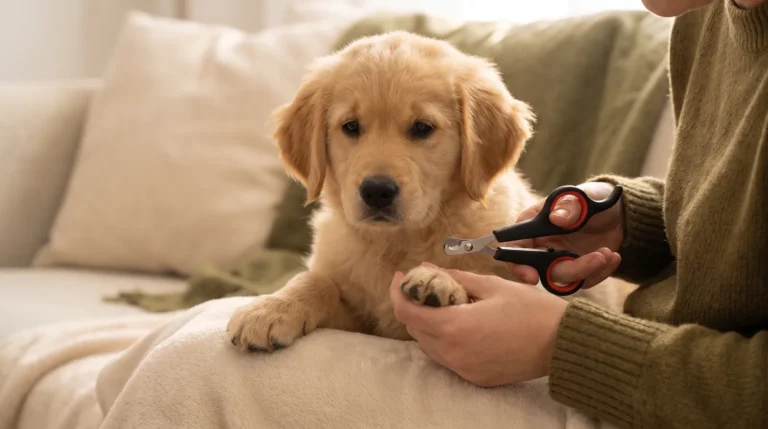
- Find them. Feel along the inside of each front leg just above the paw, and check the back legs too. Part any long fur.
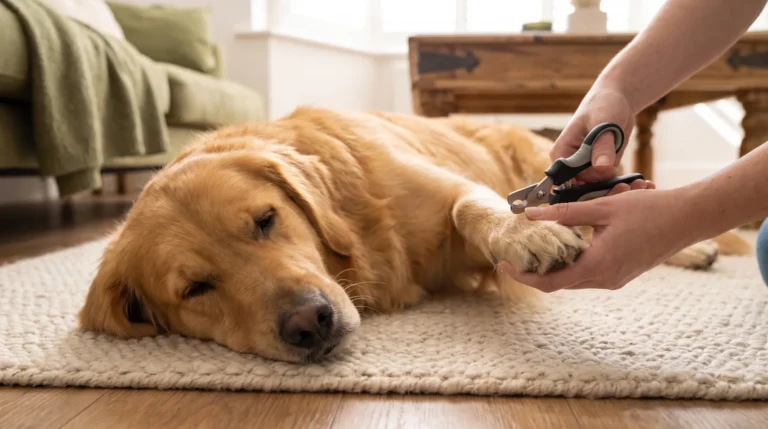
- Support the toe. Hold the dew claw steady between your thumb and finger. Because it is not supported by the ground like the other toes, it can wobble, so a firm, gentle grip matters.
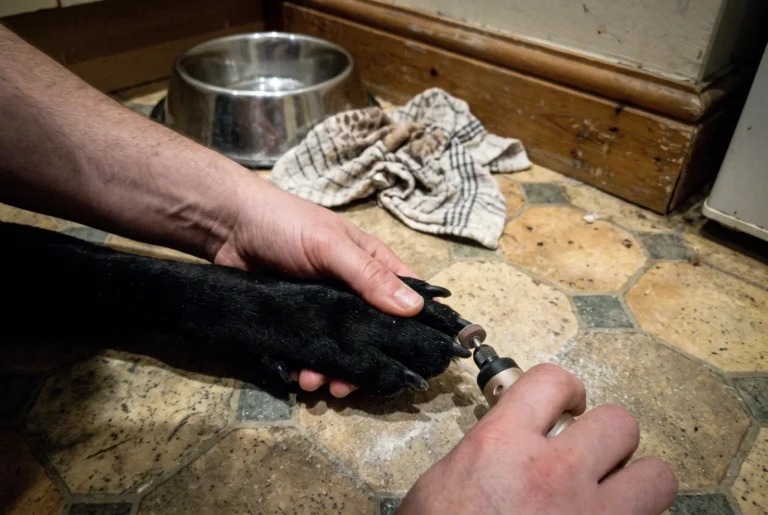
- Take thin slices from the tip with sharp dog nail clippers. Dew claws curve, so cut a little at a time and follow the curve.
- Check the cut end. When a darker dot appears in the middle, stop. On a pale dew claw you can often see the pink quick through the nail.
- Do the finger test. Run a finger along the underside. If it no longer catches, you are done.
The rest of the technique is the same as for any nail; see our full guide on how to cut dog nails. If a dew claw has already grown into the pad, do not try to pull it out yourself. Let your vet trim it and treat the wound.
Dew claw injuries in dogs
Because they stick out and can be loosely attached, dew claws are easily caught and torn, especially in dogs who run through undergrowth. Signs of a dew claw injury include:
- Sudden limping, or licking at the inside of the leg
- Bleeding from the dew claw
- A dew claw that is split, hanging, or sitting at an odd angle
- Swelling, heat or discharge around the claw
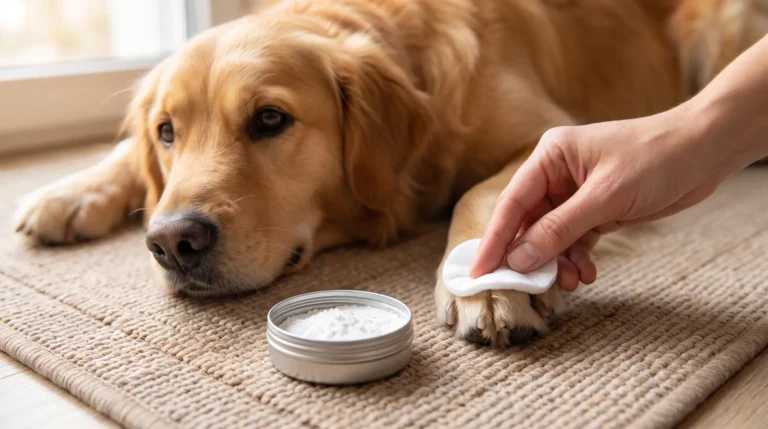
What to do: stop any bleeding with gentle pressure and styptic powder or cornflour (see dog nail bleeding), stop your dog licking it, and ring your vet. A damaged or hanging dew claw usually needs the loose part trimmed or removed properly by a vet, often with pain relief, because it is very sore. Our guide to a dog broken nail covers home care while it heals.
Should dew claws be removed?
Not routinely. Removal is a surgical decision for your vet, sometimes advised for loose rear dew claws that keep getting injured. Front dew claws are attached by bone and help stabilise the leg, so vets approach removing them with caution. For most dogs, regular trimming is all that is needed.
Quick answers
Do all dogs have dew claws? Nearly all dogs have them on the front legs. Rear dew claws vary by breed and by individual dog.
How long should a dew claw be? Short enough that it ends in a gentle curve and doesn’t touch or curl back towards the leg. If it is starting to curl round, it is too long. Trim a little at a time and stop a couple of millimetres before the quick.
What is a duke claw? “Duke claw” is a common mishearing of dew claw. It is the same thing: the extra claw on the inside of the leg.
How often should I trim dew claws? Check them every time you trim the other nails, usually every three to four weeks. They may need trimming even when the other nails do not.
Can a dew claw grow into the pad? Yes, if it is left long enough. If it has, see your vet rather than trying to free it yourself.
Is a torn dew claw an emergency? It is painful but not usually life-threatening. Stop the bleeding and get a vet appointment the same day if you can. Our guide to a broken dew claw walks you through it.
Clippers for dew claws
-
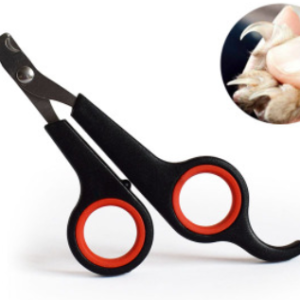
Dog Nail Scissors | Small Dog, Puppy & Cat Nail Clippers
£7.99Select options This product has multiple variants. The options may be chosen on the product page -
Dog Nail Clippers with LED Light | For Small Dogs, Puppies & Cats to Pinterest (opens in a new window)
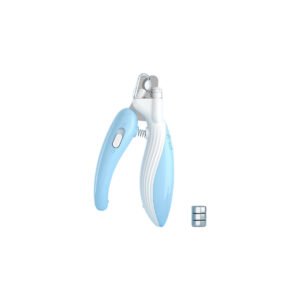
Dog Nail Clippers with LED Light | For Small Dogs, Puppies & Cats
£12.99Select options This product has multiple variants. The options may be chosen on the product page -
Dog Nail Clippers for Large Dogs | Heavy-Duty with Safety Guard to Pinterest (opens in a new window)

Keep dew claws under control
LED dog nail clippers that light up the nail to show the quick, for small dogs, puppies and cats. £12.99 with free UK delivery.
See the dog nail clippers with light →General advice, not veterinary advice. Sources: American Kennel Club; FirstVet UK (Dr Emma Bower). If a dew claw is injured, ingrown or hanging, see your vet.