Dog Nail Bleeding: What to Do If You Cut the Quick
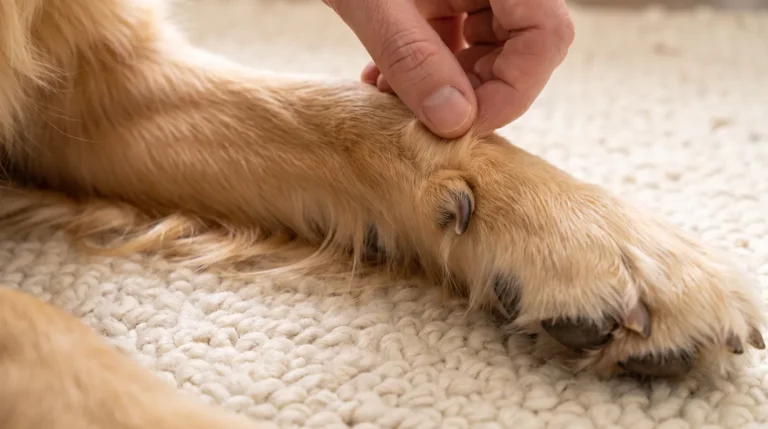
If you have just cut your dog’s nail too short and it will not stop bleeding, take a breath. Dog nail bleeding looks dramatic, because there is a small blood vessel in the nail and a little blood goes a long way on a white floor, but it is rarely serious. Here is how to stop it in a few minutes, and when you should ring your vet.
Avoid hitting the quick next time
LED dog nail clippers light up the nail so you can see where to stop. Free UK delivery.
See the clippers with light →How to stop dog nail bleeding: step by step
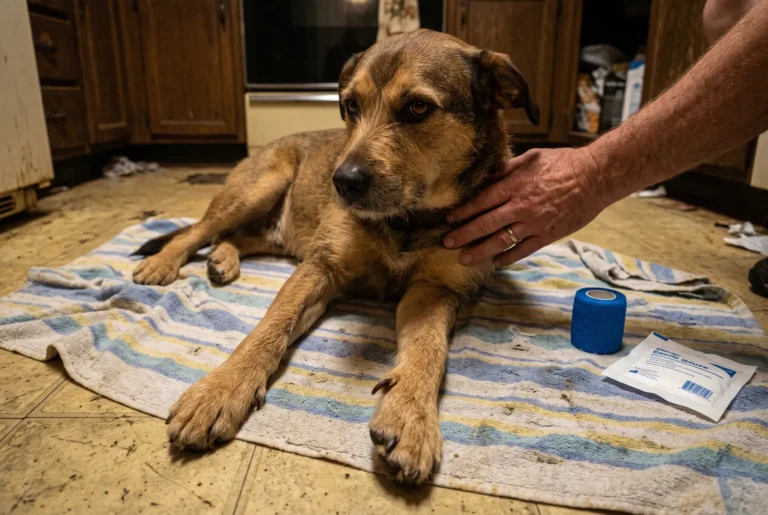
- Stay calm and keep your dog still. Your dog will take their cue from you. Sit them down and hold the paw gently.
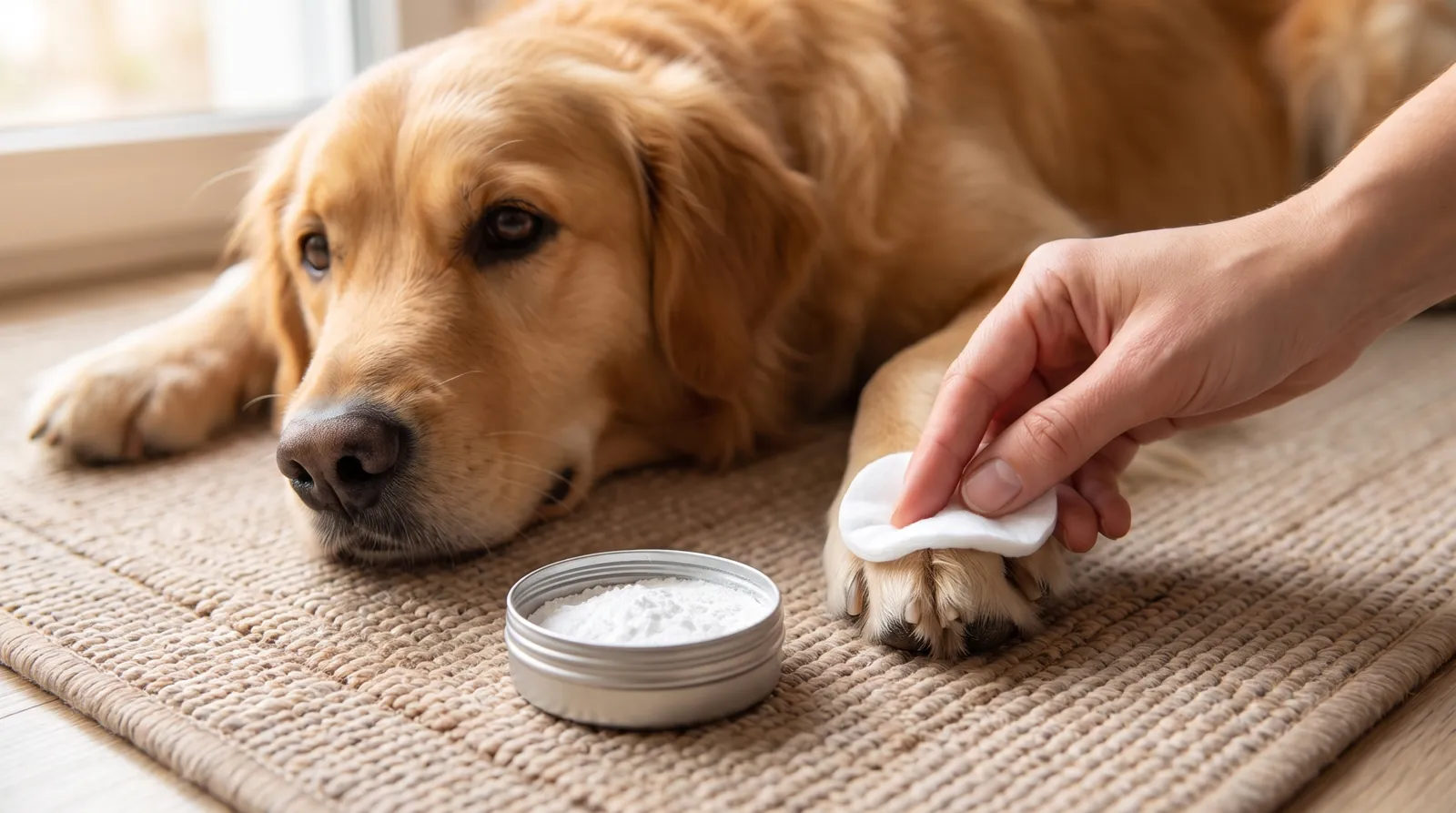
- Apply styptic powder. Put a pinch in your palm or a bottle cap and press the bleeding nail tip straight into it, so the powder packs into the end. Styptic powder is made for exactly this and stops most nail bleeds quickly.
- No powder? Use cornflour or flour. Pack it onto the tip the same way. Pressing the nail into a dry bar of plain soap also works.
- Hold gentle pressure. Use a clean cloth or kitchen roll and keep steady pressure on the tip for a few minutes. Do not keep lifting it to check; that restarts the bleeding.
- Keep your dog quiet for half an hour. No running about or walks straight away, or the clot can knock off and it will start again.
No styptic powder? What to use instead
Most homes don’t have styptic powder in the cupboard, and that’s fine. These all work the same way, by helping a clot form at the tip:
- Cornflour: press a pinch firmly onto the end of the nail and hold.
- Plain flour: the same way, if you have no cornflour.
- A dry bar of soap: press the bleeding nail gently into it and hold for a minute.
Whatever you use, the important part is firm, steady pressure for a couple of minutes without lifting to check. Then keep your dog calm and quiet for half an hour so the clot isn’t knocked off.
Bleeding after cutting: what’s normal
A nail cut into the quick usually stops within about five minutes with pressure. It can start again if your dog runs around, licks it, or knocks it, so a few spots on the floor later on is common. Press again and keep them settled. If it is still bleeding after ten minutes of firm pressure, ring your vet.
Exposed quick: what to do
If a nail breaks or is cut very short, you may see the quick itself: soft pink or red tissue at the end of the nail. It is sore, but it usually heals well.
- Stop any bleeding first, as above.
- Keep it clean and dry, and stop the licking. A loose sock for a short time helps.
- Avoid muddy walks for a few days.
- Within a few days the end should dry out and harden over.
- See your vet if it gets swollen, smelly, oozes, or your dog starts limping.
If it was a broken nail rather than a trim, our guide to a dog’s broken nail covers the next steps.
When to call your vet
- It is still bleeding after 10 minutes of firm, steady pressure.
- The bleeding is heavy rather than a steady drip.
- The nail is cracked, split or hanging, rather than neatly trimmed. That is a broken nail, not a trimming nick: see what to do about a dog broken nail.
- Over the next few days the toe becomes swollen, hot, smelly or weeps, or your dog keeps limping. These can be signs of infection.
- Your dog has a known bleeding disorder or is on medication that affects clotting.
What is the quick in a dog’s nail?
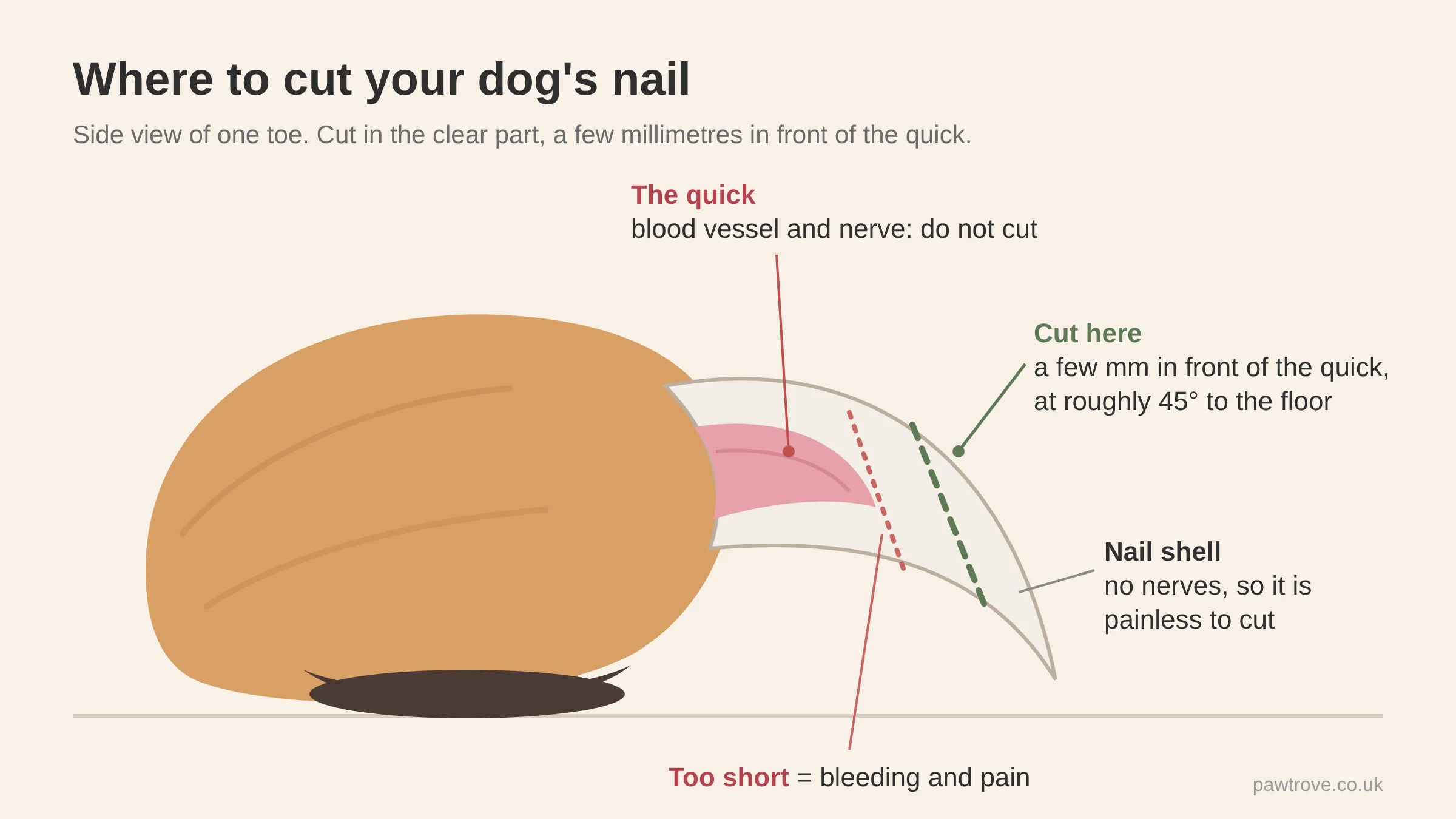
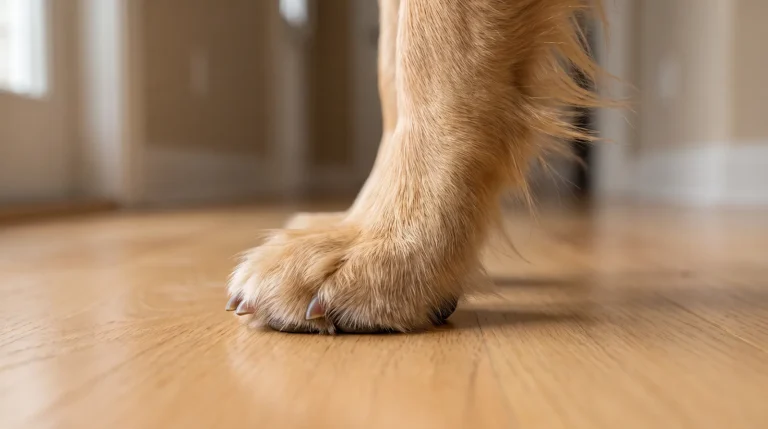
The quick is the soft, living core of a dog’s nail. It contains a blood vessel and a nerve, which is why cutting it hurts and bleeds. The hard outer shell around it is dead, like your own fingernail, and you can trim it painlessly.
On pale nails the quick shows as a pink line running down the middle. On black nails you cannot see it from the outside. And the longer a nail is allowed to grow, the further down the quick grows with it, which is why long nails are the ones most often cut too short.
The quick grows with the nail. Keep nails trimmed little and often and it stays short too.
How to avoid cutting the quick next time
- Take thin slices from the tip instead of one big cut, and look at the cut end after each one. When a darker dot appears in the centre, stop. Our guide on how to cut dog nails shows the full method.
- Use sharp clippers. Blunt blades crush the nail and make it hard to cut precisely. Clippers with a built-in light make the quick easier to see on pale nails.
- On black nails, rely on the cut end, not guesswork. See how to cut black dog nails.
- Trim more often. Regular small trims every couple of weeks encourage an overgrown quick to recede. See how long dog nails should be.
- Keep styptic powder in the kit. Having it ready makes you calmer, and a calm owner cuts more carefully.
Quick answers
Will my dog be OK if I cut the quick? Almost always, yes. It hurts for a moment and bleeds, but a trimming nick usually stops within minutes and heals on its own.
Can a dog bleed a lot from a nail? It can look like a lot, but a trimmed nail is a small vessel. Heavy or non-stop bleeding is unusual and is a reason to call your vet.
Can I walk my dog after cutting the quick? Give it half an hour or so for the clot to settle, then a calm lead walk is fine. Avoid muddy fields for a day or two and check the nail afterwards.
Can a cut quick get infected? It is uncommon, but keep the paw clean and dry and watch for swelling, discharge or limping over the next few days.
My dog now hates nail trims. What can I do? Go back to basics with short, treat-filled sessions and no cutting at first. Our nail-cutting guide has a step-by-step plan for uncooperative dogs.
Make the next trim easier
-
Dog Nail Clippers with LED Light | For Small Dogs, Puppies & Cats to Pinterest (opens in a new window)
Dog Nail Clippers with LED Light | For Small Dogs, Puppies & Cats
£12.99Select options This product has multiple variants. The options may be chosen on the product page -
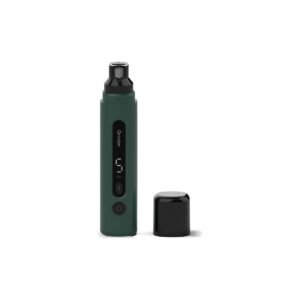
Dog Nail Grinder | Quiet, Rechargeable, 5 Speeds & LED Light
£24.99Select options This product has multiple variants. The options may be chosen on the product page -
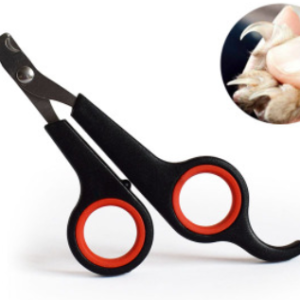
Dog Nail Scissors | Small Dog, Puppy & Cat Nail Clippers
£7.99Select options This product has multiple variants. The options may be chosen on the product page
See the quick before you cut
LED dog nail clippers that light up the nail to show the quick, for small dogs, puppies and cats. £12.99 with free UK delivery.
See the dog nail clippers with light →General advice, not veterinary advice. Sources: PetMD (Dr Laci Schaible, DVM); Washington State University Veterinary Teaching Hospital. If bleeding will not stop or the nail is broken, see your vet.