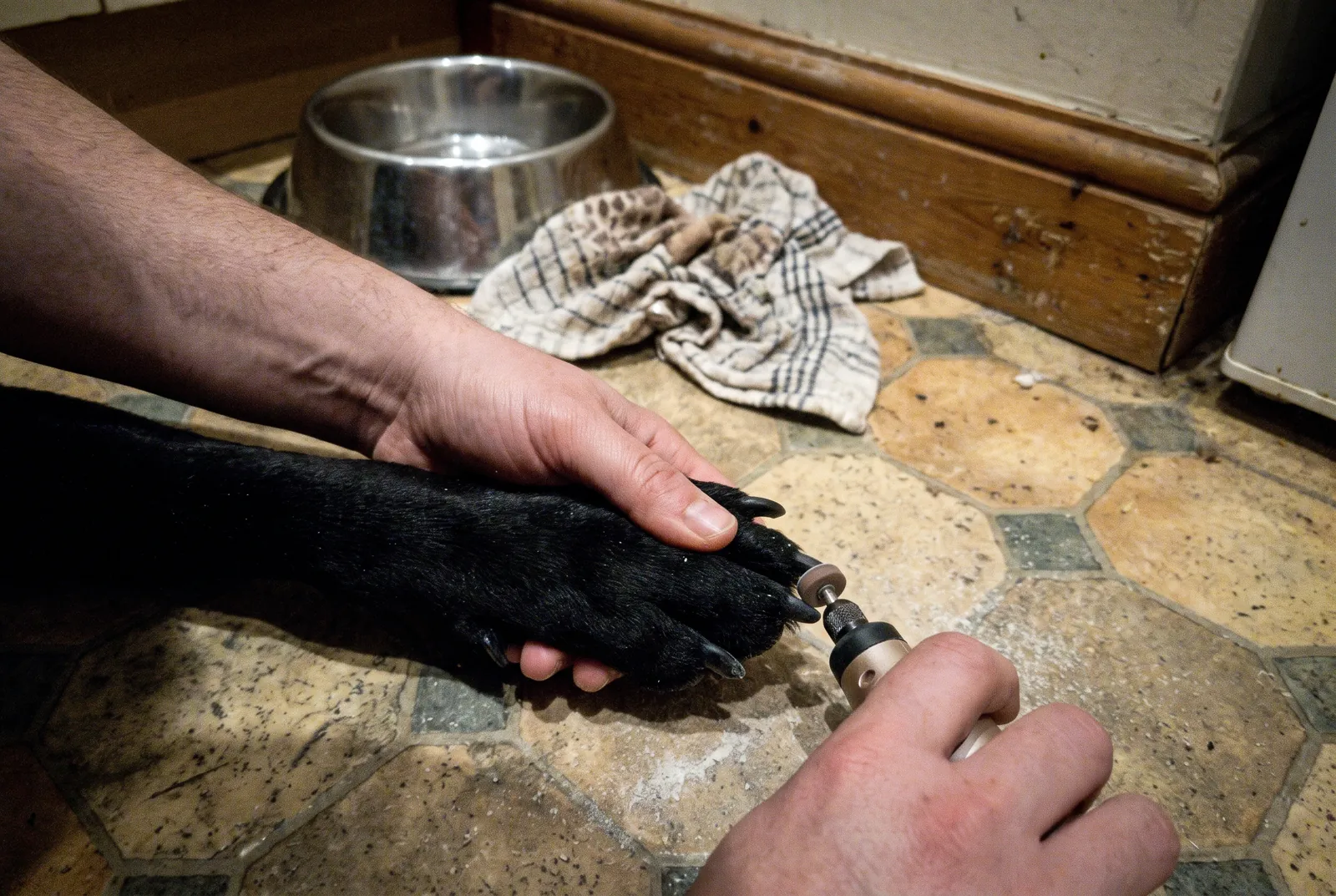
How to Grind Dog Nails at Home (Without the Drama)
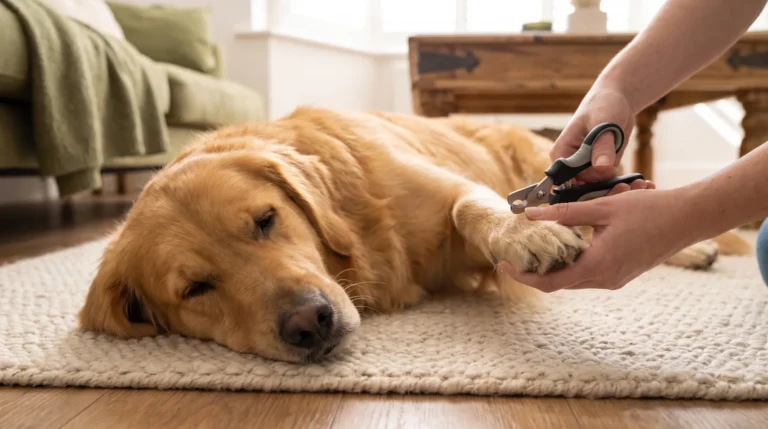
Clippers go snap, and some dogs never forgive them for it. A nail grinder works differently: it files the nail down a fraction at a time, so it is much harder to hit the quick and it leaves no sharp edges. The catch is that it takes a bit of practice, and a dog who has never heard one may need a few days to get used to the buzz. Here is how to do it properly.
The grinder we sell
Quiet, rechargeable and with five speeds, so nervous dogs can get used to it slowly. Free UK delivery.
See the nail grinder →Grinder or clippers?
| Nail grinder | Clippers | |
|---|---|---|
| Speed | Slower, a nail at a time | Fast, one snap per nail |
| Risk of hitting the quick | Low, you take off very little at once | Higher, especially on black nails |
| Finish | Smooth, rounded edges | Can leave sharp or split edges |
| Noise | A hum or buzz | A snap |
| Best for | Nervous dogs, black nails, tidy finish | Quick trims, very overgrown nails |
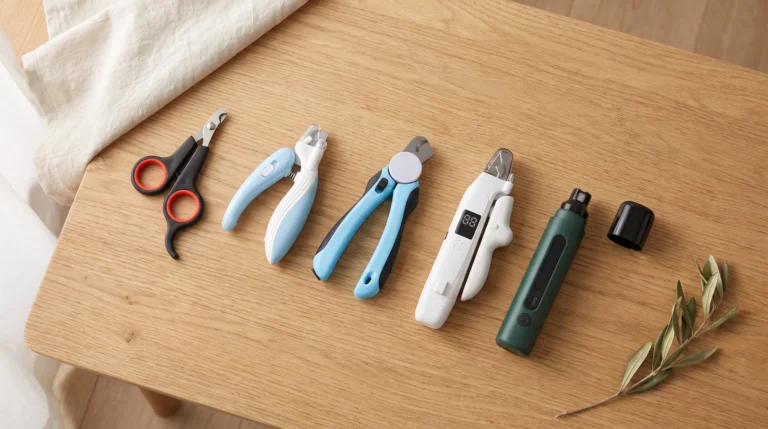
Plenty of owners use both: clippers to take the length off very long nails, then a grinder to smooth the tip. If you are still choosing a tool, our guide to the best dog nail clippers in the UK compares the types.
Step 1: Get your dog used to the grinder first
This is the step most people skip, and it is the main reason grinders end up in a drawer. Spread it over a few days:
- Day 1: switch the grinder on near your dog, give a treat, switch it off. Repeat a few times. That is the whole session.
- Day 2: hold the running grinder near a paw, without touching. Treat.
- Day 3: touch the running grinder to one nail for a second. Treat, and stop there.
- After that: add one nail at a time. One paw a day is a perfectly good result.
A lick mat stuck to the wall or floor gives your dog something better to think about while you work.
Step 2: Set up
- Good light. You need to see the end of each nail clearly.
- Lowest speed to start, and the port that fits the nail if your grinder has them.
- Fur out of the way. On fluffy breeds, long hair can wrap round the spinning bit. Push it back, or slip the paw through a piece of old tights so only the nail pokes out.
- Long hair tied back if it is yours, too.
Step 3: Where to grind
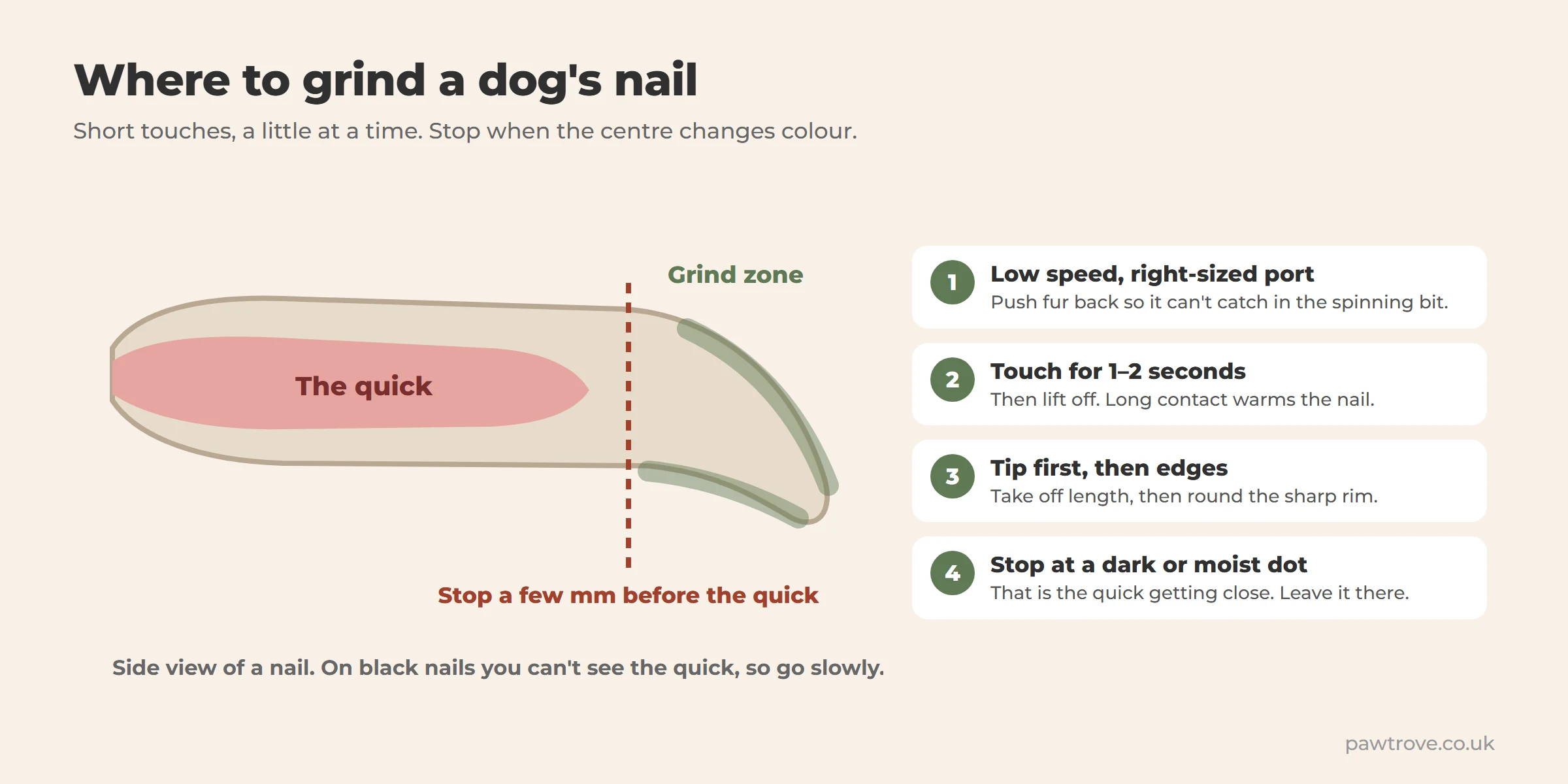
- Hold the toe firmly between your thumb and finger, close to the nail. This stops it wobbling.
- Touch the tip of the nail to the grinder for one or two seconds, then lift away. Long contact heats the nail, which dogs do not like.
- Take the length off first, working across the tip.
- Then round the edges, top and underneath, so there is no sharp rim.
- Check the end after every few passes. When a dark or slightly moist dot appears in the centre, stop on that nail.
Little and often beats one big session. A few seconds per nail every week keeps them short with almost no risk.
Black nails
You cannot see the quick through a black nail, which is exactly why a grinder suits them. Take tiny amounts and keep looking at the end of the nail. Our full guide on how to cut black dog nails shows what each colour at the cut end means.
How short should you go?
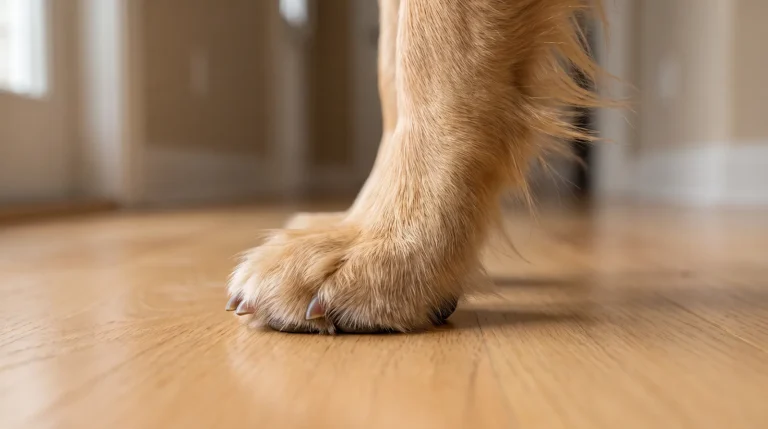
A good rule: when your dog stands on a hard floor, the nails should not touch the ground, and you should not hear them clicking. See how long dog nails should be for pictures by breed.
If you hit the quick
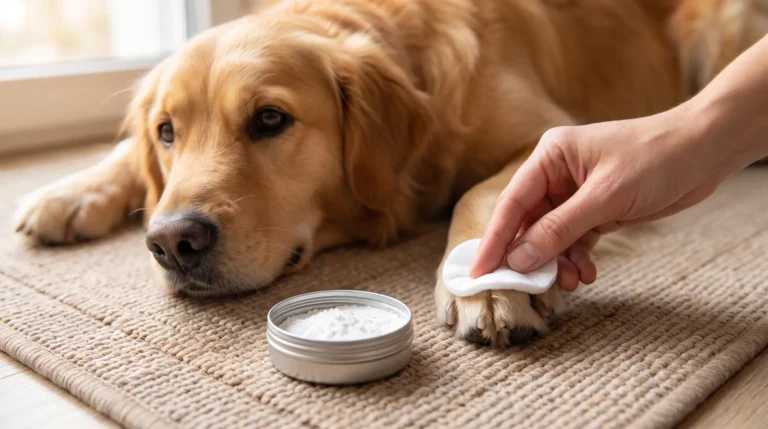
With a grinder this is rare, but it can happen. Press styptic powder or cornflour onto the tip and hold gentle pressure. Our guide to dog nail bleeding walks you through it. If it is still bleeding after ten minutes, ring your vet.
Choosing a nail grinder
- Several speeds. Low for small dogs and nervous dogs, higher for thick nails.
- Guard or ports. These guide the nail onto the bit and keep fur and skin away.
- Quiet motor. No grinder is truly silent, despite what some listings say, but quieter ones are easier for nervous dogs.
- Rechargeable. No cable to trip over while you hold a paw.
- A light helps you see the nail in a dim hallway.
Our dog nail grinder has five speeds, three ports, a diamond bit under a protective cap and an LED light. The maker rates it under 45dB. It ships from our supplier overseas, so allow 7 to 12 working days for delivery.
Quick answers
Is grinding better than clipping dog nails?
For many dogs, yes. It is harder to hit the quick and it leaves a smooth finish. It is slower, though, and some dogs need time to accept the noise.
Can I use a Dremel on my dog’s nails?
Pet-specific rotary grinders are designed for this. If you use a general rotary tool, keep it on its lowest speed, use a fine sanding band, and touch for only a second at a time, because high speeds heat the nail quickly.
How often should I grind my dog’s nails?
Every one to two weeks. Taking a little off often is easier on your dog than a big session once a month.
Do nail grinders hurt dogs?
Not when used properly. Discomfort usually comes from heat (holding it on too long), fur catching in the bit, or going too close to the quick.
A grinder nervous dogs can live with
Five speeds, three ports, a quiet motor and an LED light. USB rechargeable, with free UK delivery.
See the nail grinder →General advice, not veterinary advice. If a nail is split, bleeding heavily, or the toe looks swollen or sore, see your vet.