Deshedding Brush or Grooming Glove? How to Choose for Your Dog’s Coat
Hair on the sofa, hair on your clothes, hair in the car. Most of it is loose coat that was already on its way out, and a few minutes of the right grooming catches it before it lands. The question is which tool: a deshedding brush or a grooming glove? It mostly comes down to your dog’s coat.
Not sure which to get?
Our deshedding brush reaches the undercoat on double-coated dogs. Our grooming glove suits short coats and nervous dogs. Free UK delivery.
See the deshedding brush →The difference in one minute
Deshedding brush
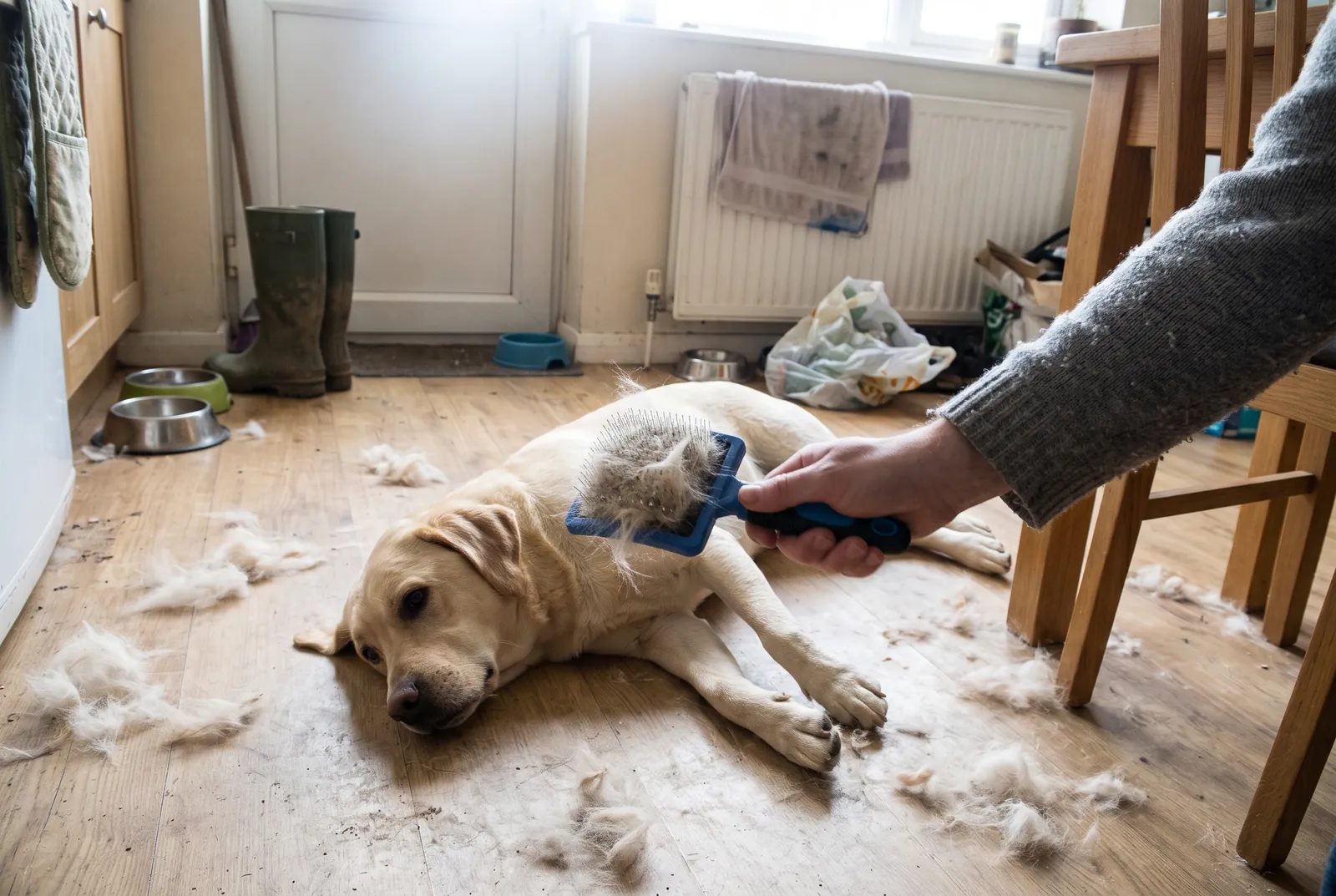
Long, round-tipped pins reach down into the soft undercoat, which is where most shedding comes from. Best for thick and double coats.
Grooming glove
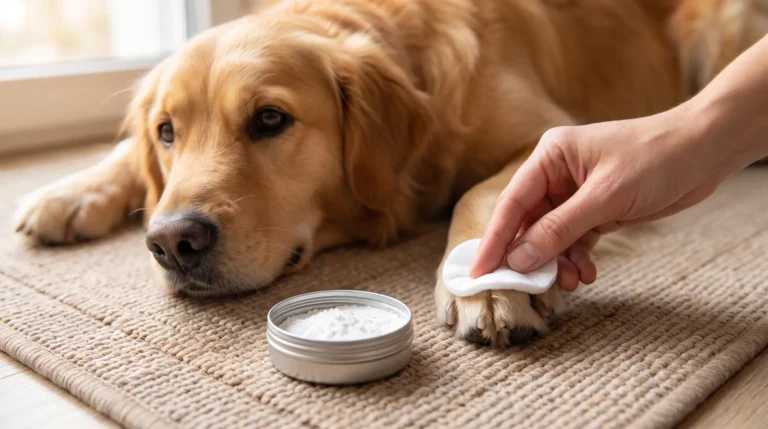
Soft rubber tips on a glove lift loose hair from the surface as you stroke. To your dog it feels like attention, not grooming.
Which one suits your dog’s coat?
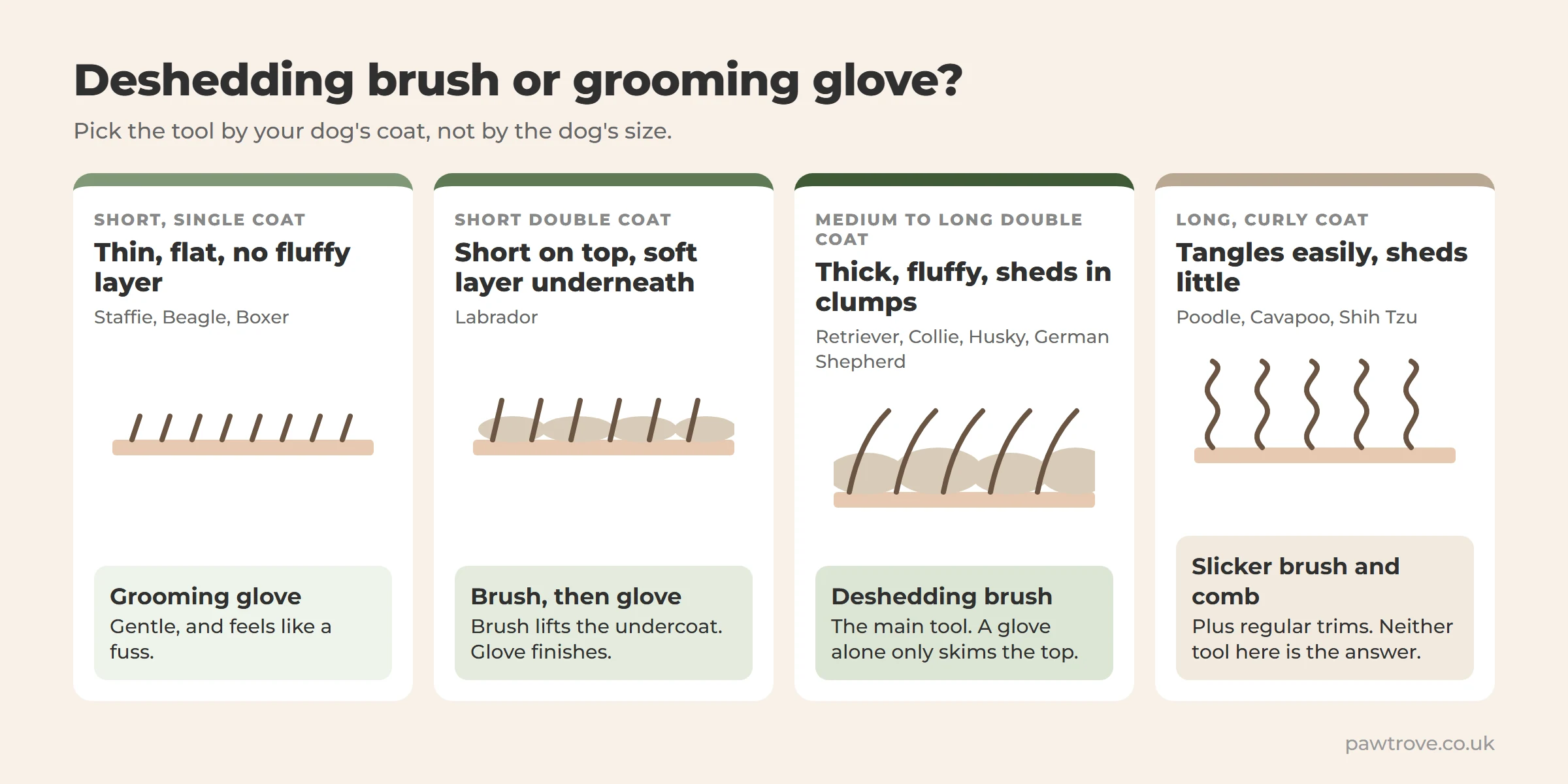
| Coat type | Examples | Best tool |
|---|---|---|
| Short, single coat | Staffie, Beagle, Boxer | Grooming glove. Pins aren’t needed and can feel scratchy on thin coats. |
| Short double coat | Labrador | Deshedding brush, then the glove to pick up what’s left on the surface. |
| Medium to long double coat | Golden Retriever, Collie, Husky, German Shepherd | Deshedding brush as the main tool. A glove alone only takes surface hair. |
| Long, curly or “non-shedding” coats | Poodle, Cavapoo, Shih Tzu | Neither is the main tool. These coats tangle and need a slicker brush, a comb and regular trims. |
Not sure what coat your dog has? Part the hair on their back. If you see a soft, woolly layer under the outer hairs, that’s a double coat.
Why a glove isn’t enough for a double coat
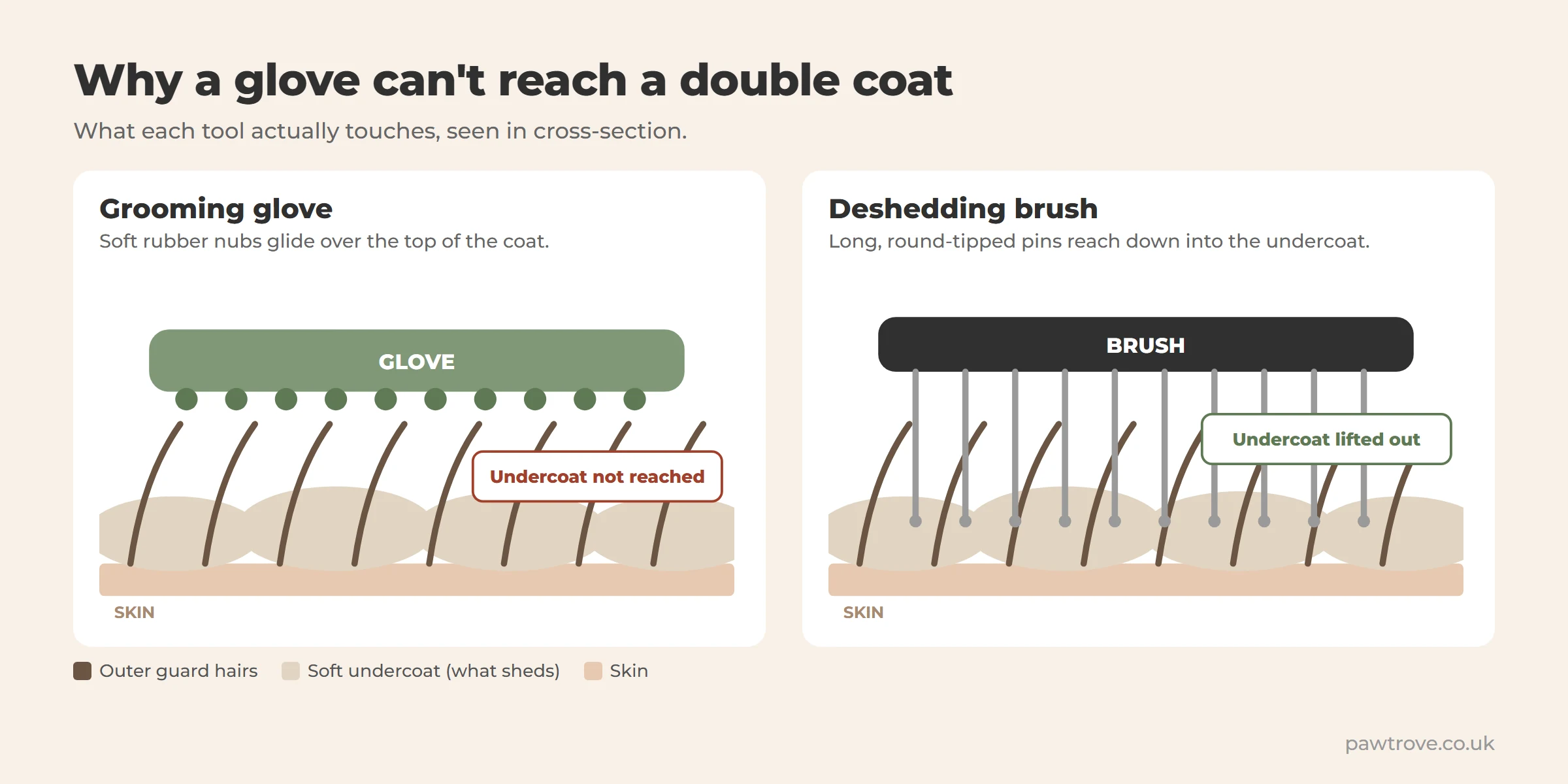
A double coat has two layers: tougher outer guard hairs and a soft undercoat underneath. In spring and autumn the undercoat “blows”, and that’s when the tumbleweeds of fur appear. A glove glides over the top layer and collects what’s loose on the surface. It can’t reach the undercoat, so the shedding carries on. A deshedding brush’s pins are long enough to get down to it and lift it out.
Why a brush can be too much for a short coat
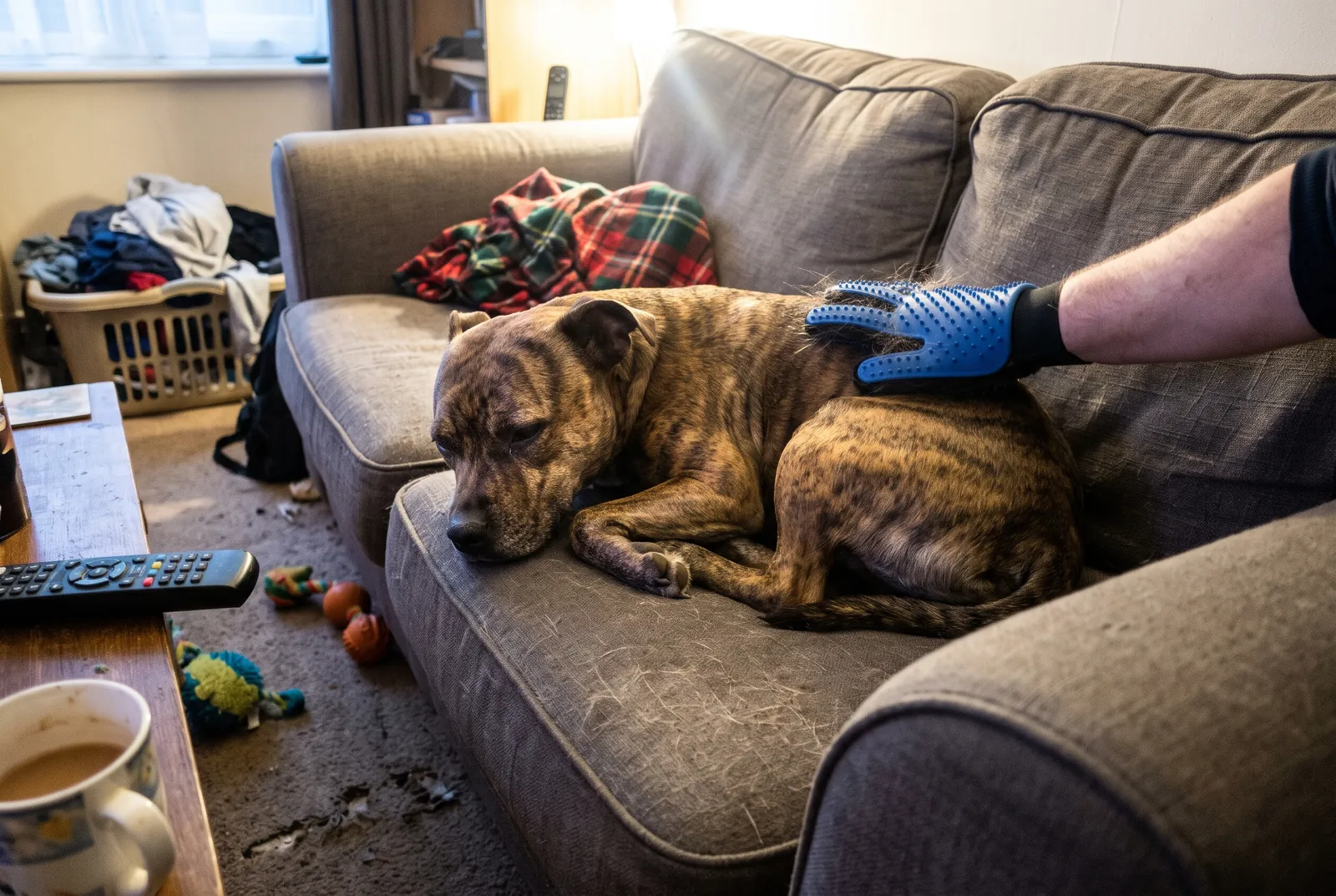
On a short, thin single coat there’s no undercoat to reach. Pins go straight to the skin, and plenty of short-coated dogs simply won’t sit still for it. A rubber glove does the job gently, and many dogs who dodge a brush will happily lean into a glove.
How to groom without a fight
- Keep it short. Two short sessions a week beats one long one. Stop before your dog gets fed up.
- Go with the coat. Brush or stroke in the direction the hair grows, in short strokes, starting at the shoulders.
- Hold knots at the base with your other hand, so you pull the knot and not your dog’s skin.
- Do it outside or on an old towel. Less to hoover afterwards.
- Reward as you go. A treat every few strokes for the first few sessions makes it something to look forward to.
How often should you deshed?
For most dogs, a couple of short sessions a week is plenty. During a heavy moult, usually in spring and autumn, double-coated dogs may need a few minutes every day for a week or two. A quick rub with a microfibre drying robe after a wet walk also lifts a surprising amount of loose fur.
Hair already all over the car? See how to get dog hair out of your car.
Quick answers
Is a deshedding brush or a grooming glove better?
It depends on the coat. A deshedding brush is better for double coats like Labradors and Retrievers because it reaches the undercoat. A grooming glove is better for short, single coats and for dogs who don’t like brushes.
Do grooming gloves actually work?
Yes, on short coats. They lift loose hair from the surface well. On thick double coats they only take surface hair, so use them as a finishing tool after a brush.
What is the best deshedding brush for a short-haired dog?
If the coat is short and single, a rubber grooming glove is usually gentler and works just as well. If it is short but double, like a Labrador, a deshedding brush with rounded pins is worth having.
Can I use both?
Yes. On a double coat, the brush does the main work and the glove picks up the loose hair left on the surface.
Can deshedding hurt my dog?
Not if you go gently. Use rounded pins, short strokes and short sessions, and stop if the skin looks red or sore.
Short coat or nervous dog?
A soft rubber grooming glove that lifts loose hair while your dog just enjoys the fuss. Free UK delivery.
See the grooming glove →General advice, not veterinary advice. If your dog’s skin is sore or the hair loss is patchy, see your vet.